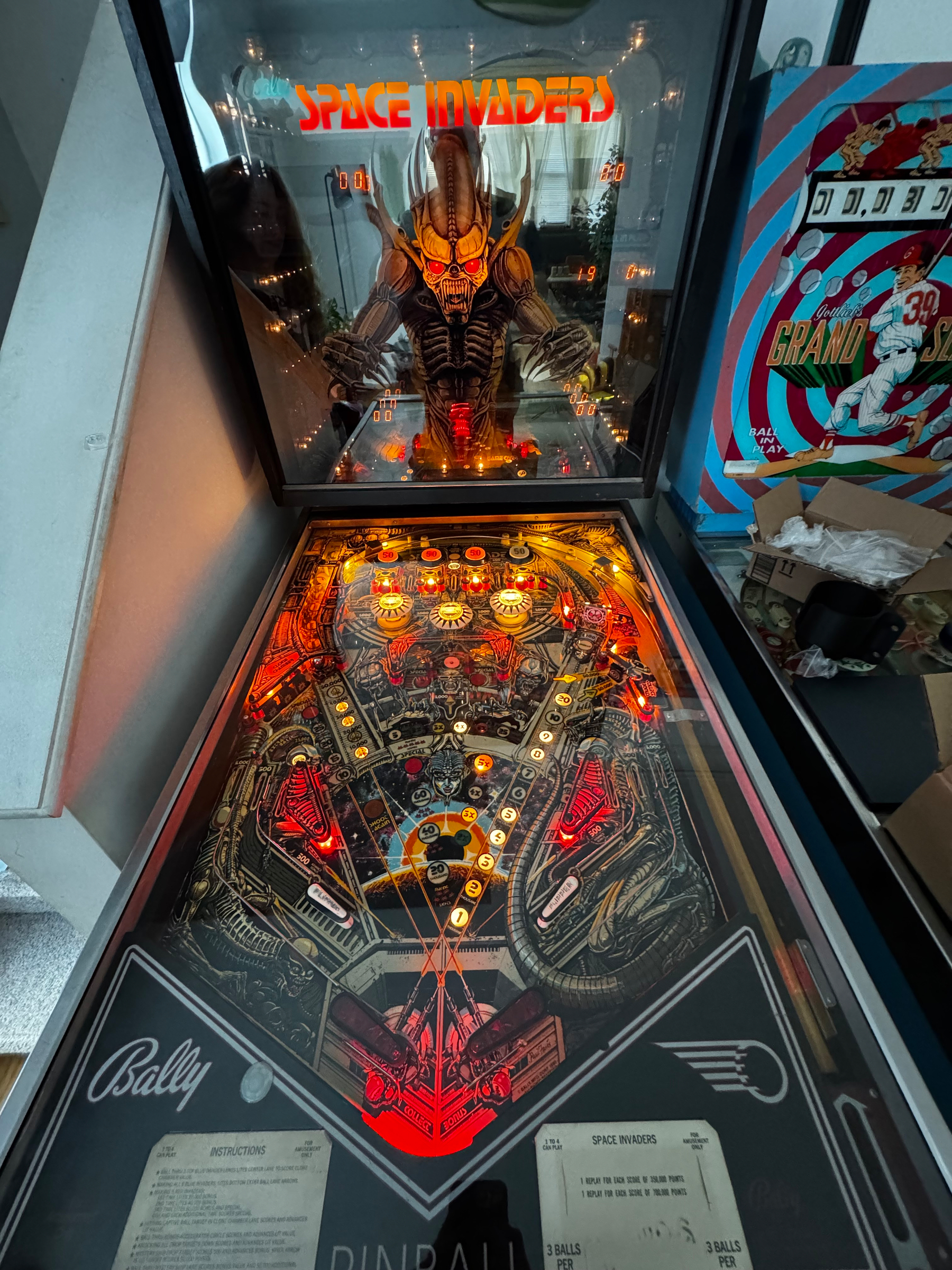
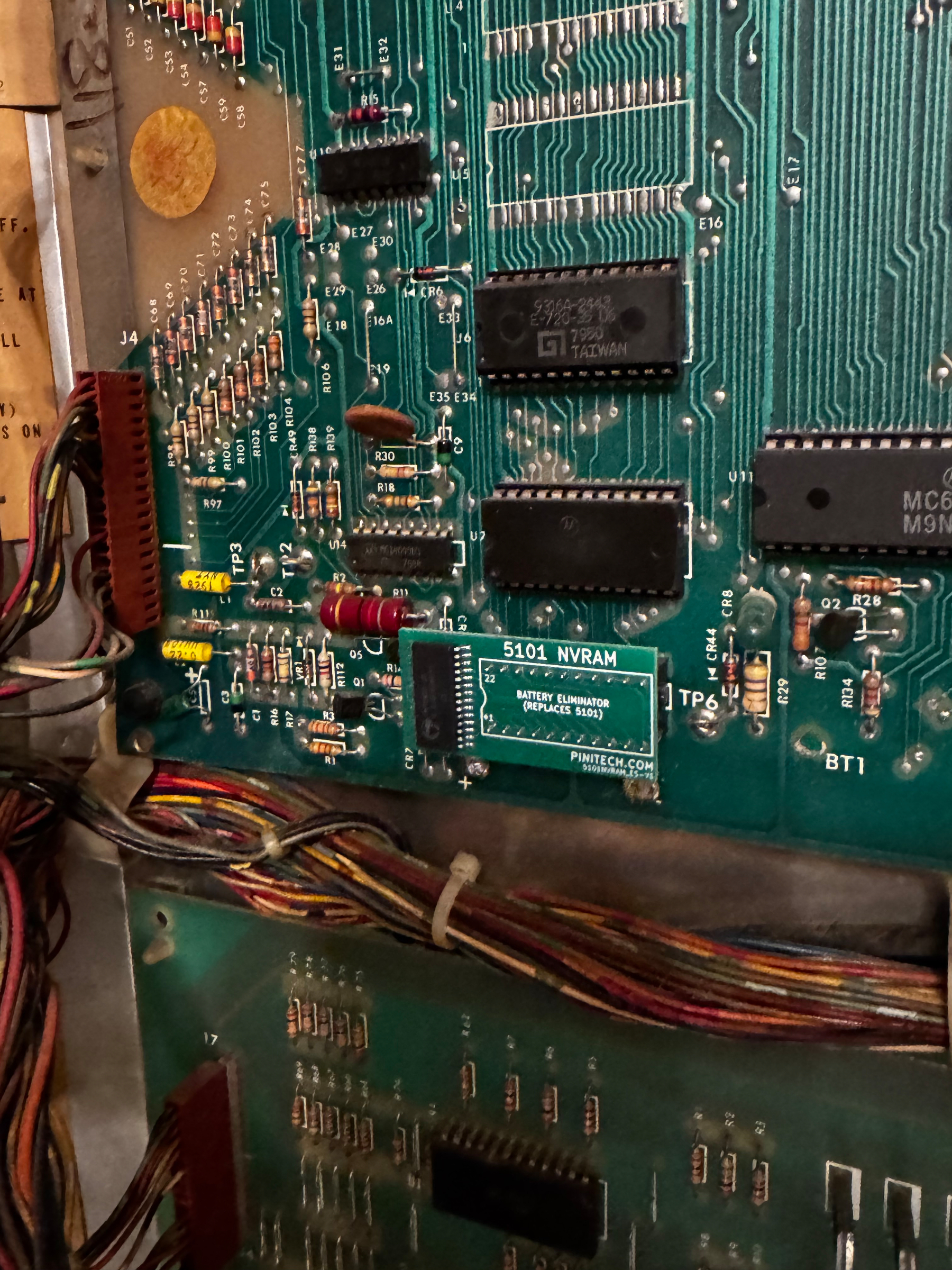
Back to the Space Invaders pin for a bit! I got my NVRAM installed, which is a corrosion-free way to store settings and high score data. For context, when this game was released in 1980, it came with batteries, but over time those can leak and really mess up the boards. #pinball
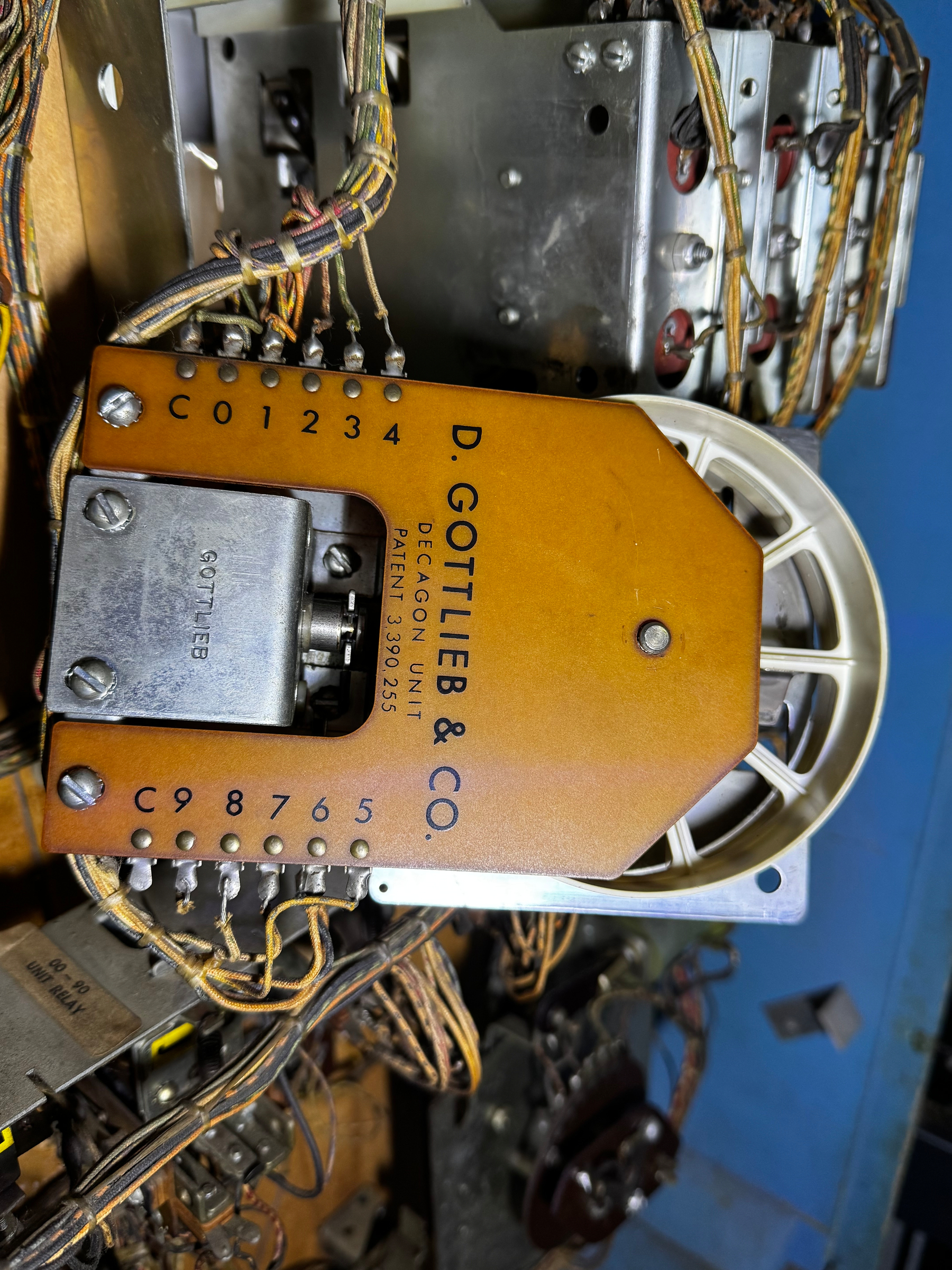
Next up is the 10k score reel, which is having some weird problems. It’s not rolling over correctly and for some reason the coil is active at all times. Gonna dig into that soon! #pinball
Replaced the coil, (re)adjusted a few switches and we’re back in action! #pinball
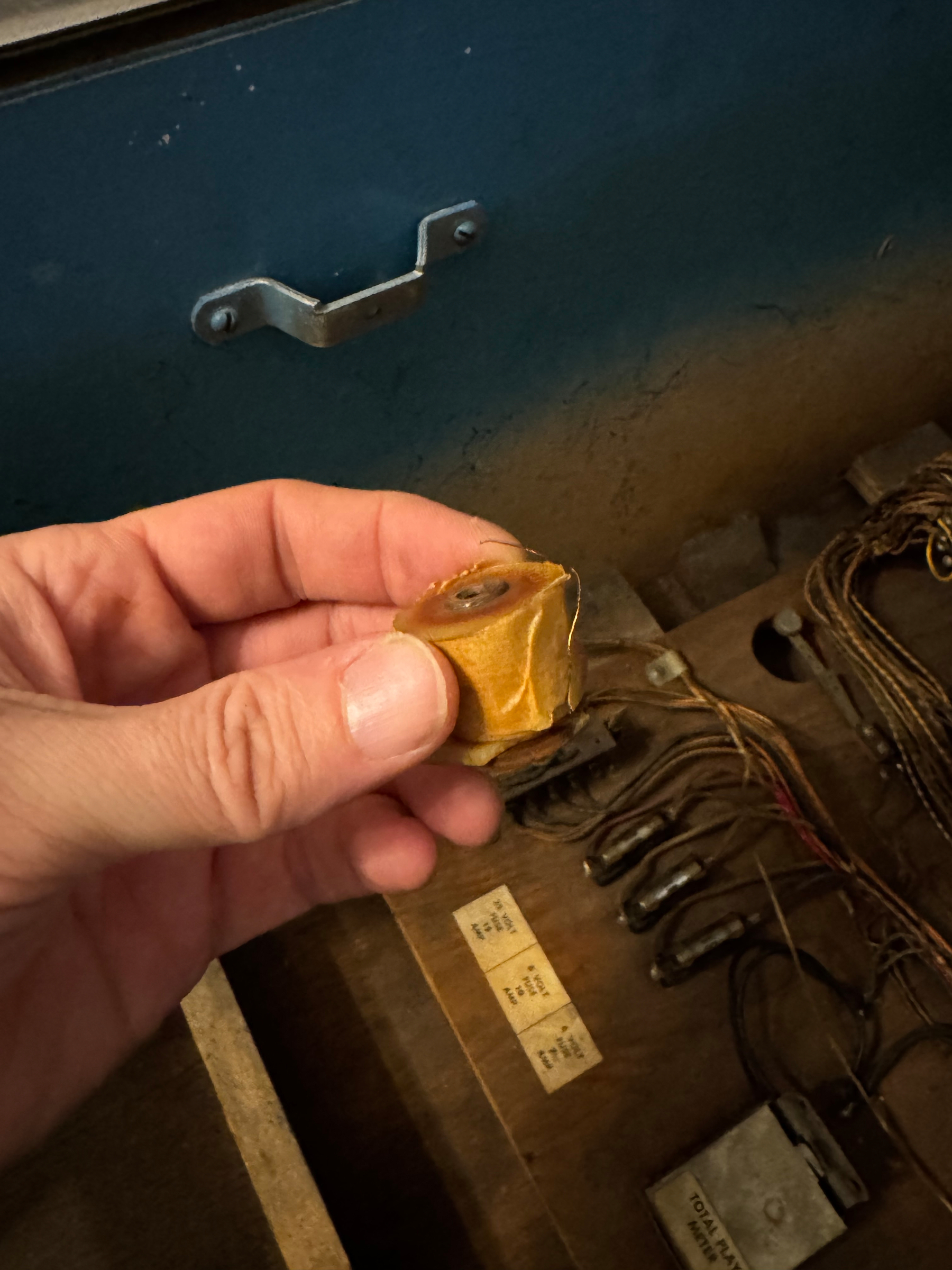
Time to replace the hold relay coil. This one basically just fell out. See that plastic piece on the bottom? That’s supposed to extend out much further and that’s where the wires would be soldered on. This one is very old (maybe the original from 1972!) and definitely due to be replaced. #pinball
So good news is it appears you have not been spammed by a ton of old blog posts. Bad news is a lot of my image links need repair, so guess I’m doing that tomorrow!
I’m going to attempt to import all my previous blog posts from other platforms so if you see a ton of stuff from me: 1. please read it because it’s awesome and so are you and 2. I’m sorry for the spamming
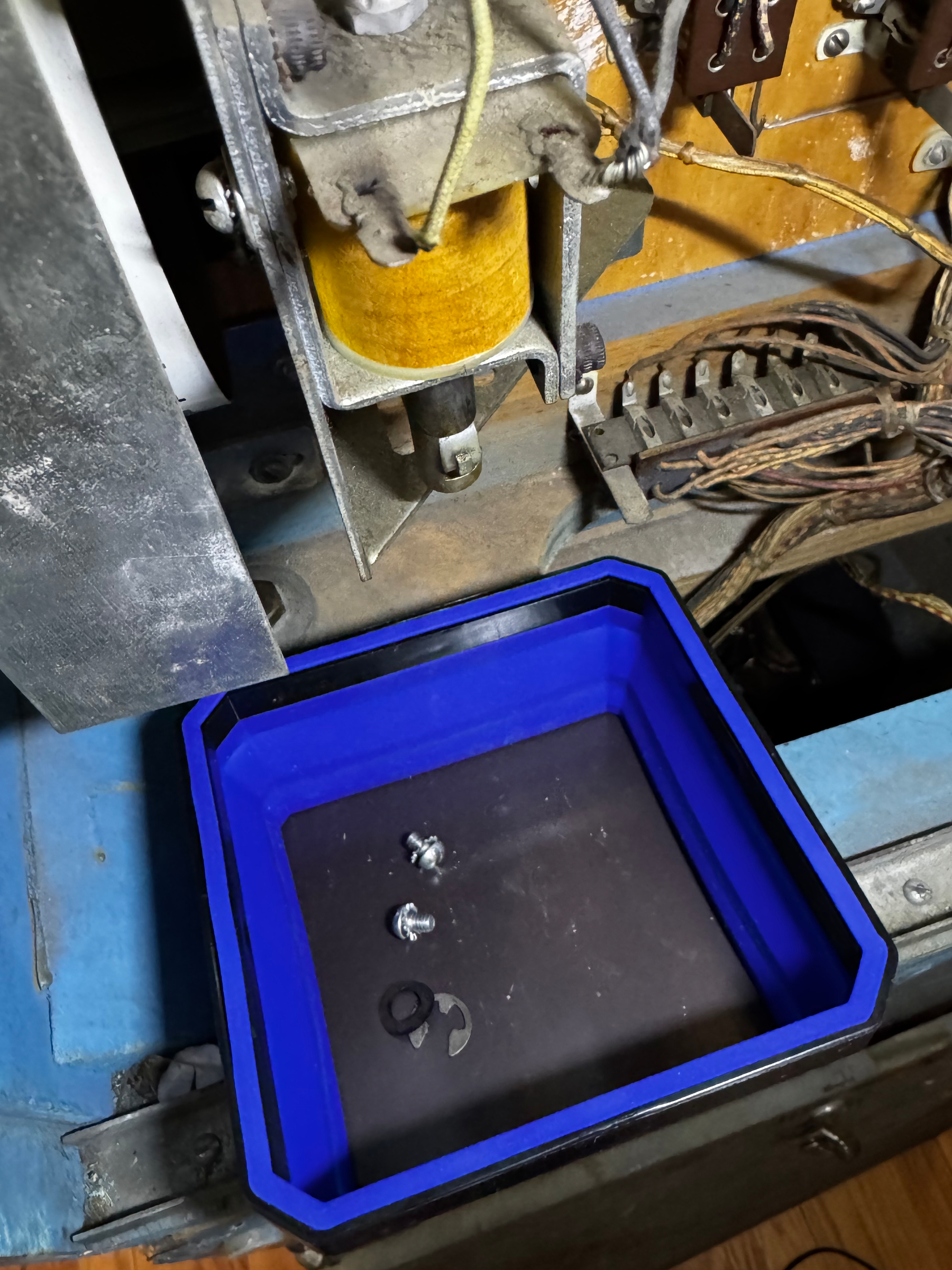
The magnetic parts tray is easily a Top 10 invention
Are slugs just homeless snails?
Fixing this during some breaks today. This is the tens score reel and it’s not resetting. First step is to disassemble and clean, then we’ll see what comes next.
Where are all my #pinball folks at? Players, collectors, fixers, let’s chat! For context I’ve got 2 at home, Space Invaders (‘80 SS) and Grand Slam (‘72 EM). Space Invaders plays well but I need to get it fully shopped, and just got Grand Slam so it needs some reel reset work before it’s playing.
Day 1, post 1 of my micro blog!
Hi everyone, I’m Sean. I am consistently inconsistent when it comes to blogging and social posting. When I do post something, it will probably be about sports, family, Chicago, pinball, books, or some really bad dad jokes. You may occasionally see some of my opinions on politics which, by the way, do not involve being cruel to others, giving even more money to the mega-rich, or lying to gain power.
There are books that surprise you with their cleverness, and there are books that haunt you because of the questions they leave behind. Michael Finkel’s The Art Thief somehow manages to do both. When I picked it up, I expected a standard true crime account with museum break-ins, a clever criminal, and a ticking clock. What I got was something far more complicated—and far more human.
At the center of this story is a man named Stéphane Breitwieser, a soft-spoken, unassuming Frenchman who stole over 200 pieces of art from nearly 200 museums across Europe.
There’s a special kind of thrill in buying something that doesn’t just work the moment you bring it home. Most of today’s gadgets come sealed and sterile, optimized for convenience. You push a button and they do exactly what they’re supposed to do. Reliable, yes. Exciting, not so much. Pinball, though—that’s different. Pinball is messy, mechanical, alive. When I dragged home my first machine, a Bally Space Invaders from 1980, I wasn’t just buying a game.
When Lizzie Magie patented The Landlord’s Game in 1903, she intended it as a critique of land monopolies. Her “prosperity rules” promoted fair taxation and shared wealth, while the “monopoly rules” demonstrated how inequality spirals out of control. By the time Parker Brothers mass-marketed Charles Darrow’s version in 1935, only the monopoly rules remained. The cautionary tale became the world’s best-selling ode to accumulation. That pivot alone is a capitalist masterclass: take a critique, commodify it, and sell it as entertainment.
There used to be a magic to being offline. A kind of sacred disconnection. When someone said they were “offline,” it didn’t mean they were on airplane Wi-Fi or set to Do Not Disturb. It meant they were gone. Unreachable. In their own world, or maybe someone else’s. Out fishing. On a bike ride. At dinner, on purpose. A little bubble of space where no one expected a reply.
Now “offline” is more of a costume.
I was born and raised in Texas, which means voting has always felt like a mix of responsibility, ritual, and—if I’m being honest—frustration. I’ve stood in long lines at polling places where half the machines didn’t work, watched friends walk away because they didn’t have the “right” ID, and listened to relatives rant about voter fraud like it was gospel. So when I picked up We’ve Got to Try by Beto O’Rourke, I expected a political memoir laced with soaring rhetoric.
A few weeks ago I had the privilege of visiting The Art Institute of Chicago. One painting I was looking forward to seeing was Edward Hopper's Nighthawks. I'm regularly drawn to and awed by this painting. Here's why.
My wife and I moved to Chicago in late 2019. When we moved to the city, it felt like possibility. A new apartment, a neighborhood to explore, the kind of fresh start that makes you walk around with a little bounce in your step even when you’re lost.
If you’re on Earth, “left” and “right” feel as real as your own hands.[1] They’re constants in your mental map, always ready for quick navigation: turn left at the corner, the remote is on your right, pass me the salt on the left. But those words are actually fragile little conveniences, bound tightly to the environment where they were born. Take them far enough away—say, into orbit or beyond—and they begin to unravel.
If aliens ever studied Earth from afar, there’s a good chance they’d think we worship the airplane. These sleek metal birds dart across the sky in orderly formations, leaving white streaks behind them like signatures on the heavens. But beyond their visual grace, airplanes are functional masterpieces—sculpted more by physics and economics than by aesthetics. Still, for something so marvelously complex, the silhouette of a commercial aircraft remains remarkably consistent: long cylindrical body, swept-back wings, tail fin, nose cone.
There’s something quietly radical about saying the words “I was wrong.” In a culture that prizes certainty, expertise, and fast takes, admitting error feels like breaking character. It can make you seem weak, indecisive, or, worst of all, uninformed. But what if the opposite were true? What if recognizing and embracing your mistakes was actually one of the most intelligent, growth-minded moves you could make? What if being wrong was the gateway drug to getting smarter?